
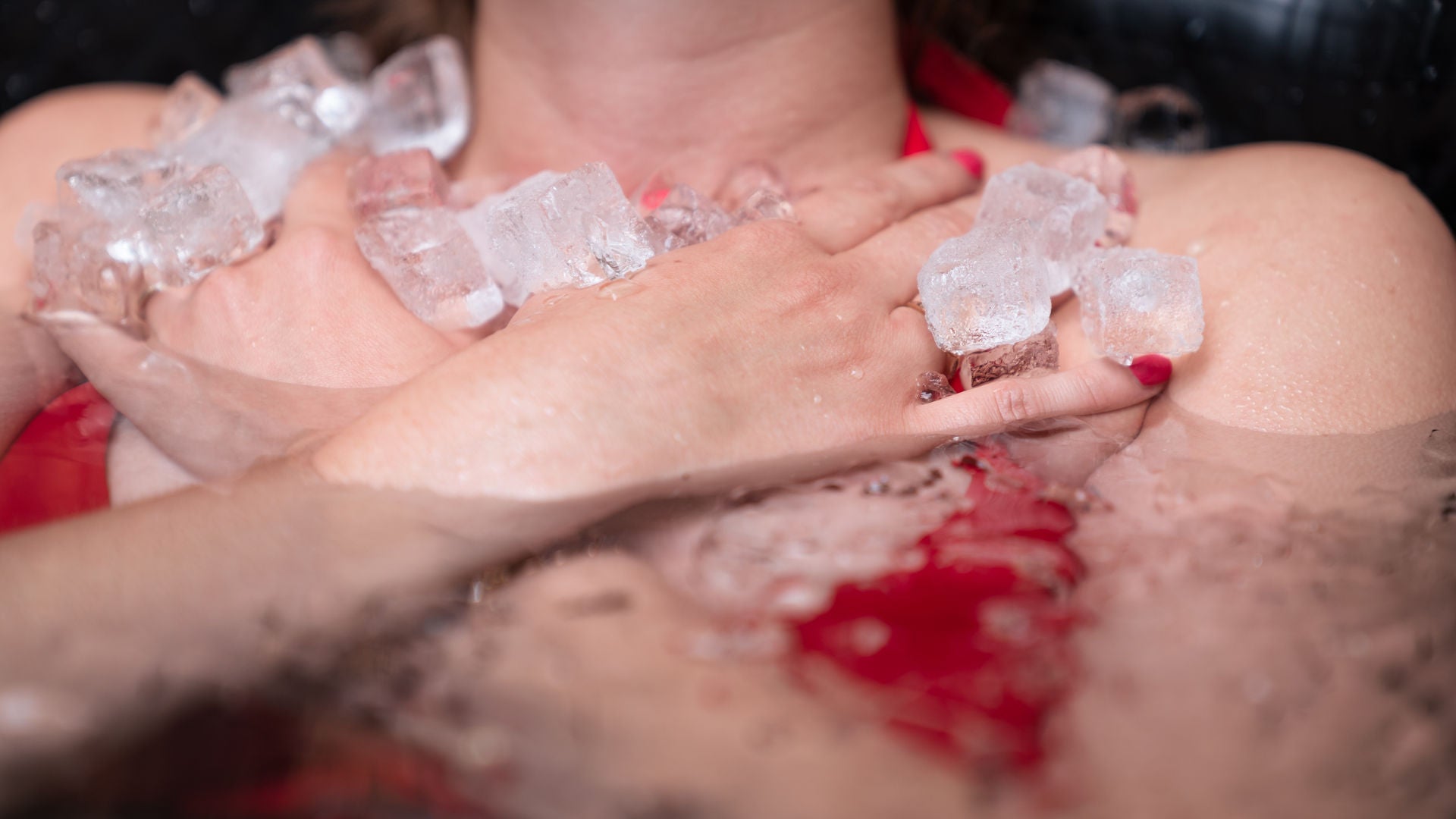
- by Pia Baten
What are the real benefits of ice bathing? The most important health advantages
- by Pia Baten
Ice bathing can be unpleasant. It takes a lot of courage and effort, and even after the tenth time, it remains a tough experience. Anyone who claims you get used to it has probably forgotten how challenging cold can feel. So why do more and more people voluntarily step into ice-cold water?
The answer: because the ice-cold effect is as strong as the shock of immersion. Ice bathing is not pleasant – but extremely effective. It strengthens the immune system, makes you mentally tougher, boosts your mood, and helps the body recover faster after exercise.
Our motto says it all: BE BRAVE! Those who are brave are usually rewarded. In this article, you will learn about the benefits of ice bathing, what it triggers in the body – and why it might even change your life.
Ice bathing is more than just a test of courage. Various positive effects on body and mind are associated with it. With this article, we want to clarify what ice bathing really offers. We will examine the following benefits and explain what science says about them:
Strengthening the immune system
Mood-lifting effects
Cardiovascular system training
Anti-inflammatory effect
Pain-relieving effects
Acceleration of cell cleansing (autophagy)
Increased stress resistance
Activation of metabolism

Cold acts as an acute stimulus that temporarily activates the immune system. A Dutch study showed: People who regularly take cold showers or ice baths are less often sick in the long term - up to 29% less often than those who take warm showers! The cold stimulus also stimulates the production of immune cells. These endogenous defense cells not only increase in number, but also penetrate deeper into the tissue due to cold-induced vasodilation.
Conclusion of science: Ice bathing can train the immune system and specifically modulate the body's natural inflammatory response, especially after intense physical exertion. Studies show that swelling and muscular inflammatory markers subside faster due to the cold stimulus, leading to less muscle soreness and faster recovery. This local anti-inflammatory effect makes ice baths a proven tool in sports recovery.
→ Overall: Even if it is not yet conclusively clear whether ice bathing can permanently reduce the number of infections, there is much to suggest that it stimulates the immune system and contributes to general resilience.
The combination of short-term activation and long-term regulation shows the potential of cold for our immune system.

It sounds crazy at first, but it's scientifically proven: A study by Nikolai Shevchuk (2007) showed that regular cold exposure can increase dopamine levels by up to 250%. Dopamine is our happiness hormone – it lifts the mood and promotes motivation and focus. Especially during the darker winter months, ice bathing can be a real ray of hope for many.
→ Overall: Ice bathing demonstrably provides a noticeable energy boost and a significant mood lift – many people feel more awake, clearer, and mentally stronger immediately after the bath.
Initial studies also suggest that regular cold exposure can improve general well-being and sleep quality. Although clinically significant effects on anxiety or depression have not yet been clearly demonstrated, many users report more stable mood and greater inner balance in everyday life.
Ice baths really get your circulation going. Cold exposure leads to rapid changes in the vascular system. First, the peripheral vessels constrict sharply (vasoconstriction) to keep heat in the body's interior.
When warming up after an ice bath, they dilate again (vasodilation). This constant constriction and dilation acts like training for the vascular muscles and can temporarily increase blood flow.

In practice, ice bathers report warm, tingling skin and an energizing feeling after getting out – a sign that the cardiovascular system and blood flow have been activated. Theoretically, regular cold training could help make blood vessels more flexible in the long term and improve circulatory regulation.
For example, cold-water swimmers have been observed to have better blood flow to their fingers and toes in the cold (an adaptation that protects against frostbite). However, robust long-term studies on the general population are still lacking.
→ Overall: In the short term, an ice bath improves peripheral blood flow and oxygen supply to the muscles through the alternation of constriction and dilation.
When applied regularly, cold can have an anti-inflammatory effect. This is one of the main reasons why it is so popular in sports medicine. By constricting blood vessels, blood flow to inflamed areas is temporarily reduced, which reduces swelling and the release of pro-inflammatory messengers. At the same time, the cold stimulus ensures that the body pumps more fresh, oxygen-rich blood into the affected areas after warming up – a process that supports healing.
→ Overall: Repeated cold exposure improves the body's ability to resolve inflammation faster. Especially after physical exertion, an ice bath has an inflammation-modulating effect.
Cold can act like a natural painkiller: It slows down nerve conduction, which means pain signals are transmitted less strongly to the brain. At the same time, it reduces inflammation and swelling, which provides noticeable relief, especially for muscle soreness or injuries. That's why many athletes specifically rely on cold baths as an effective and quick pain relief.
Smaller studies investigated the effect of cold applications on chronic pain such as rheumatism or chronic lumbar spine syndrome (LWS). Positive effects were indeed observed: Participants reported a noticeable reduction in pain, improved mobility, and increased well-being after regular cold applications. However, these results are mostly based on subjective statements. The strongest evidence to date therefore comes from personal experience reports of affected individuals who find regular ice bathing to be beneficial.
→ Overall: This effect is particularly effective when the ice bath is taken immediately after intense exertion. For chronic pain, there are currently mainly individual experience reports. However, the effect on acute muscle pain is well documented.

Researchers at the University of Ottawa found in 2024 that regular ice bathing can increase autophagy, a process of cell cleansing, by up to 70%, breaking down damaged cell components. At the same time, the risk of programmed cell death (apoptosis) decreased, as cells began to regulate this process after one week of cold exposure. These results suggest that cold exposure can have positive effects on cell health and could reduce inflammation and chronic diseases in the long term.
→ Overall: While these results are preliminary, they are very promising, and research into the effect of cold on autophagy in humans is still in its early stages.
Upon immersion in ice-cold water, the body initially reacts with a stress response. The sympathetic nervous system switches to alarm mode: heart rate and blood pressure soar, and stress hormones like adrenaline and noradrenaline are increasingly released.
Many people feel a strong heart palpitation at this moment and have to consciously fight against hyperventilating. Interestingly, however, cold also releases a wave of messenger substances for well-being. Studies show that cold water stimuli stimulate the release of dopamine and β-endorphin. These are neurotransmitters that cause euphoria and pain relief.
This "hormone cocktail" explains the euphoria and immediate pain relief that often occur directly after an ice bath. Scientifically, it has also been observed that several hours after the cold stimulus, stress parameters (cortisol) are lower than before: A meta-analysis showed a significantly reduced perception of stress 12 hours after a cold application compared to control groups.
→ Overall: An ice bath is short-term stress for the body, but in controlled doses, this positive hormonal stimulus seems to make body and mind more resilient and resistant.
A less obvious but much-discussed benefit of ice bathing is the activation of brown adipose tissue.
Unlike white fat, which primarily serves as energy storage, brown adipose tissue specializes in burning energy in the form of heat (thermogenesis). Cold temperatures activate brown fat – the body tries to warm itself up without shivering, thereby burning calories.

A 2022 study showed that in people, after a brief acclimatization, the volume and activity of brown adipose tissue significantly increased.
At the same time, the daily energy expenditure increased by an average of approx. 188 kcal – an indication that metabolism is boosted by cold.
Theoretically, regular ice bathing could thus support fat burning and contribute to better weight control in the long term. Some studies also show improved insulin sensitivity due to cold, which is positive for sugar metabolism.
→ Overall: Ice bathing alone usually does not lead to dramatic weight loss – the effects are moderate and primarily complement a healthy lifestyle of diet and exercise. However, as a metabolism booster, ice bathing is definitely interesting and unique.
Why is ice bathing, even with its many advantages, not suitable for everyone? People who don't know how fit they are or who have pre-existing cardiovascular diseases, high blood pressure, or neurological conditions should consult a doctor beforehand. Caution is also advised during pregnancy. And: Untrained or unprepared individuals who take an ice bath for too long risk hypothermia or circulatory problems. Therefore, the rule is: start slowly, always listen to your own body, and never go ice bathing alone.
Ice bathing is more than a trend. It is a powerful practice that holistically strengthens body and mind. From improved mood to a strengthened immune system and faster recovery after sports. Most benefits are well scientifically proven.
Ice bathing temporarily activates the immune system and can improve the resilience and adaptability of the immune system with regular use.
The cold stimulus triggers the release of dopamine and endorphins, which provides a significant mood boost in the short term.
The alternation between vasoconstriction and vasodilation acts like training for the blood vessels and can temporarily improve blood circulation.
Ice baths help to reduce acute inflammation – especially after physical exertion – more quickly and support healing in the tissue.
Cold reduces the transmission of pain signals and acts as a natural analgesic – particularly effective after intense physical exertion.
Initial studies suggest that repeated cold exposure can stimulate cellular cleansing processes and thus support cell health.
Ice bathing initially activates the stress system, but in the long term leads to better regulation of the stress response and demonstrably lowers cortisol levels.
By activating brown fat and increasing energy consumption, ice bathing can promote metabolism and contribute to blood sugar regulation.
Of course, cold is not a panacea, but a simple and effective way to boost your performance and well-being. Therefore, our clear recommendation is:
Take a deep breath, bravely step into the water, and discover for yourself what the power of the ice bath truly brings you.
Do you want to benefit from the health advantages as quickly as possible?
Then take a look at our popular ice bath complete sets here.
Last updated: 08.11.2026
Buijze et al. (2016), The effect of cold showering on health and work: A randomized controlled trial. PLOS ONE, 11(9).
Cain et al. (2025), Cold exposure and its physiological effects: A systematic review and meta-analysis. PLOS ONE.
Peake et al. (2017), Muscle damage and inflammation during recovery from exercise. J. Physiol, 595(9), 3017–3031.
Moore et al. (2022), Effects of cold-water immersion on recovery from exercise:
A meta-analysis. Sports Med, 52, 1895–1909.
Roberts et al. (2015), Post-exercise cold water immersion attenuates anabolic signaling and muscle adaptation. J. Physiol, 593 (18), 4285–4301.
Wang et al. (2025), Cold water immersion dose effects on post-exercise recovery: A network meta-analysis. Front. Physiol, 16, Article 1525726.
Bleakley et al. (2012), Local cooling and return to sport: A systematic review. Sports Med, 42 (1), 69–87.
Huo et al. (2022), Cold exposure and brown fat activation: A meta-analysis. Front. Physiol, 13, 879954.
Shevchuk (2007), Adapted cold shower as a potential treatment for depression. Med Hypotheses, 70(5), 995–1001.
Martinez-Lopez et al. (2016) – Autophagy in adipose tissue and systemic metabolism regulation. Nature, 529, 258–262.
Tipton et al. (2000) – Habituation of cold shock response in humans. Eur. J. Appl. Physiol, 81(5), 437–442.
By subscribing to our newsletter, you will receive the latest insights and tips from the world of cryotherapy once a month in the form of articles and videos, as well as access to discount offers.
Losing weight through ice bathing: How cold activates your brown adipose tissue
Ice bathing for regeneration: The best remedy for sore muscles