
- by Pia Baten
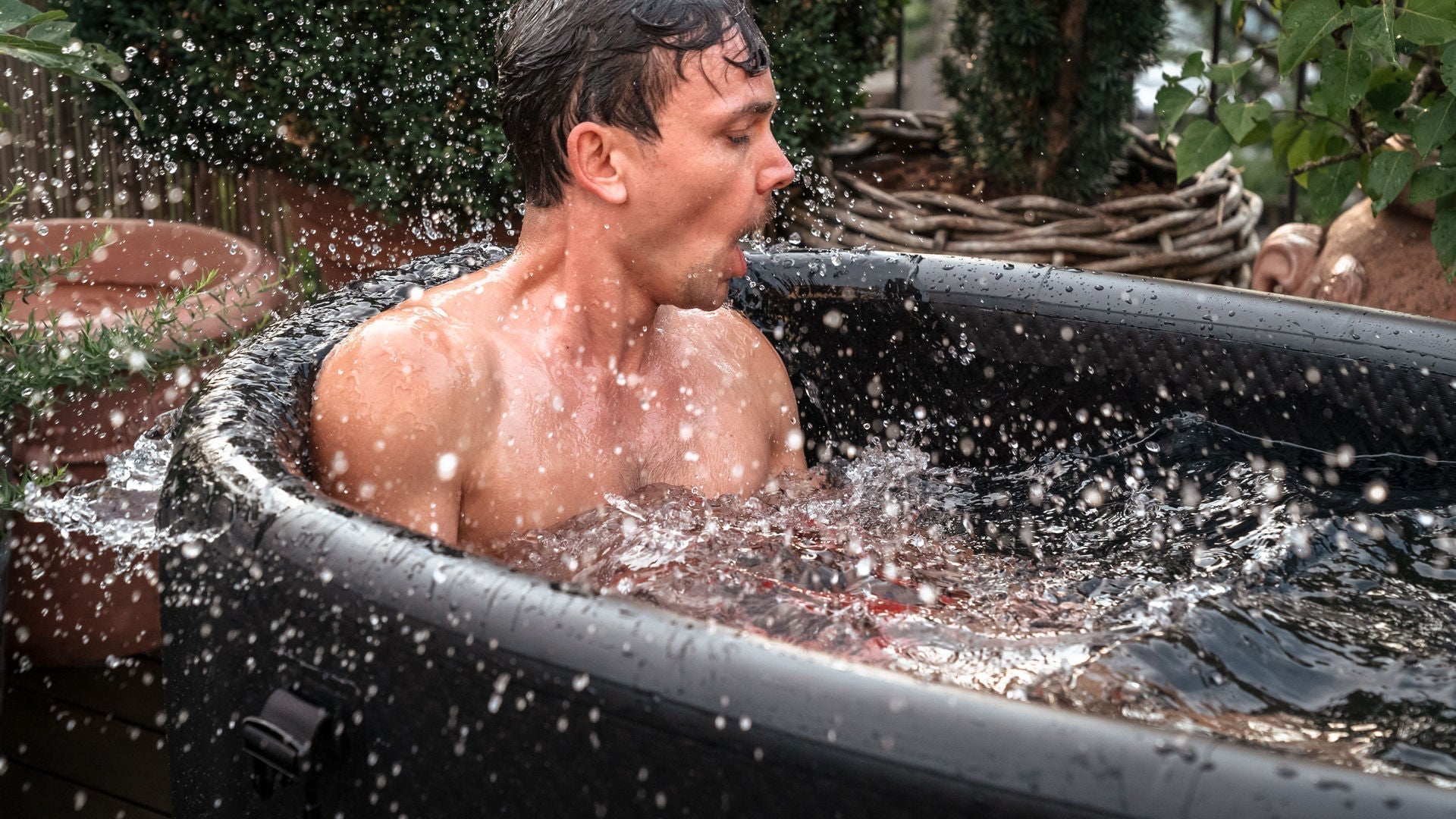
Ice bathing for regeneration: The best remedy for sore muscles
- by Pia Baten
Anyone who wants to stay healthy and perform well for longer should definitely consider the topic of recovery. Because good recovery is not a luxury, but a biological necessity. It serves not only the next competition but also your long-term health.
Ice bathing is no longer just a trend among self-optimizers; elite athletes also rely on the effect of cold. LeBron James invests around 1.5 million dollars annually in his recovery, including regular ice baths, to continue playing at a top level even at almost 40 years old.
Anyone who wants to live up to their maximum potential cannot avoid effective recovery, and that is exactly what this article is about. If you want to maintain your performance and health for as long as possible, you will find the most important answers here.
Recovery encompasses the biological, neurological, and psychological processes by which the body restores its performance and maintains it long-term after exertion.
This exertion can take various forms, such as intense physical activity, but also mental stress, lack of sleep, emotional exhaustion, or professional pressure.
In sports, a clear distinction is made between two forms of recovery: active and passive recovery.
Active recovery refers to gentle movement with low intensity, such as light cool-down, swimming, stretching, or even special breathing techniques. These promote blood circulation, the removal of metabolic products, and thus help to quickly regain performance.
Passive recovery includes true rest phases without targeted activity. This means sleep, relaxation, massages, nutrition, or cold water applications like ice baths. They have a regenerating effect on the nervous system, muscles, and immune system.
In this article, we mainly focus on the effects of ice bathing on a physiological level, but also want to consider the neurological and psychological aspects.
Ice bathing involves several mechanisms that promote recovery and can thus affect athletic performance:
Muscle soreness is reduced
Ice bathing can significantly reduce muscle soreness after training by slowing down inflammatory processes and dampening pain signals in the nervous system. It also promotes the removal of waste products such as creatine kinase and lactate. These effects ensure that the typical stiffness and pressure pain in the days after training are significantly weaker.
Inflammation is curbed
After intense exertion, the body reacts with minor inflammation, which is part of the natural healing process. However, if this becomes too strong, it slows down recovery. Regular ice bathing inhibits the production of pro-inflammatory messengers because the cold slows down cellular metabolism. The result: less swelling, less muscle stress, faster recovery.
Removal of metabolic products
The change from strong cold (vasoconstriction) and subsequent warming (vasodilation) acts like a natural "pump" for the circulatory system. This allows metabolic products such as lactate to be broken down more quickly – precisely the substances that accumulate after training and cause muscle soreness or a feeling of heaviness. An ice bath helps the body to cleanse itself faster.
Less muscle fatigue and faster recovery
After demanding training sessions, many athletes feel drained, even if they don't actually have muscle soreness. But this is exactly where the ice bath unfolds its effect. It reduces the subjective feeling of fatigue, improves neuromuscular coordination, and helps to reach the original performance level faster. This is particularly valuable if you train regularly or need to be in top shape the next day.
Short-term performance booster
In addition to the muscular recovery effects, a bath in the ice tub can also improve short-term performance. Studies show that athletes can jump higher or sprint faster after an ice bath, for example – probably because the muscles are less stiff and the nervous system is better regulated. For sports with a dense training or competition schedule, this is a valuable advantage.
A comprehensive, representative meta-analysis from February 2025 confirms once again:
Ice bathing can accelerate muscle recovery.

In total, 55 randomized controlled studies were evaluated, which examined the effectiveness of different cold water immersion (
CWI) protocols to support recovery after acute physical exertion.
The results are based not only on a broad data set but also compare various target markers: muscle soreness, creatine kinase levels, and jump performance.
In summary, the following tips for ice bathing after exercise can be derived from this.
Temperature:
A water temperature between 5 °C and 15 °C is recommended. This range showed the best results in the analysis regarding the reduction of muscle damage, inflammation values, and muscle soreness.
Duration of application:
Cold water immersion of 10 to a maximum of 15 minutes is considered optimal. Shorter applications are less effective, longer ones can lower the body's core temperature too much and impair well-being and health.
Time of application:
The best effects were achieved with immediate application after intense physical exertion. This allows inflammatory processes to be curbed early and the restoration of performance to be accelerated.
Regularity:
Multiple applications per week, especially after high-intensity training sessions, are useful. However, daily application is not recommended, as it can potentially hinder adaptation processes in muscle training.
Individual adjustment:
Protocols should be individually adjusted. Different constitutions, cold resistance, and training states require flexible application, both in terms of duration and temperature.

The effect of ice bathing doesn't stop at the muscles – the psyche also plays a central role in the recovery process. Studies show that athletes feel not only physically but also mentally more recovered after a cold bath. This feeling arises from several effects: on the one hand, the cold reduces pain sensation – the muscles feel less drained. On the other hand, after the cold stimulus, there is a measurable increase in mood-lifting neurotransmitters like norepinephrine and endorphins, which can lead to more alertness, focus, and even slight euphoria.
Mental stress, which often occurs after intense exertion, is also demonstrably reduced by ice baths. The feeling of actively doing something for one's own recovery acts as a psychological amplifier and can shorten recovery time. In addition, initial studies show that cold applications can improve heart rate variability (HRV) – an indicator of parasympathetic activation and thus deeper relaxation.
And last but not least: Regular ice baths promote mental resilience – one learns to deal better with unpleasant stimuli. It is precisely this mixture of physical relief and mental strength that makes ice bathing an effective tool for holistic recovery.
When you take your ice bath is crucial for its effectiveness. To effectively reduce muscle soreness and provide a fresh energy kick, it is generally recommended to take an ice bath soon after exercise. This way, the acute inflammatory response is attenuated "in the bud."
If your goal is to build muscle mass, ice bathing immediately after training is not a good idea. Recent studies show that cold bathing interrupts acute anabolic signals in the muscle and delays or blocks the activity of satellite cells, which are essential for muscle growth. This can lead to less muscle mass and strength growth in the long term. In this case, an ice bath before exercise is the most sensible option.

And what happens if you take the cold bath later, for example, several hours after training? Evidence for this is scarce, but there are some practical considerations and indirect indications: On the one hand, a significantly delayed ice bath is likely to have little influence on already ongoing inflammatory processes, and its effect against acute pain might also be reduced, as muscle soreness and swelling would have already set in.
On the other hand, waiting longer might prevent the ice bath from directly interfering with the anabolic remodeling processes of the muscle, which are enormously important for muscle growth. Experts therefore recommend a periodized approach: During phases where maximal training effects (muscle and strength gain) are the priority, ice baths directly after strength training should be avoided. Instead, use a cold bath on rest days or after less intense cardio sessions (endurance, technical training) to still benefit from the recovery effects.
Our tip: For recovery before a tournament or competition, you can use your ice bath most effectively directly after training. However, if the training stimulus for muscle building is the focus, it makes sense to take the ice bath before exercise or to integrate it specifically into other training phases.
Ice bathing can be a valuable tool for recovery and mental strengthening when used purposefully and consciously. It offers effective physical and mental benefits for athletes of all performance levels, including:
reduced muscle soreness,
decreased fatigue, and
faster restoration of performance.
However, in the long term, their use should be planned specifically: In endurance training, they are harmless and help to endure a high training volume, whereas in strength training they should be used sparingly so as not to impair muscle growth. With thoughtful timing, for example, ice baths during competition phases but not during build-up phases – athletes can benefit from the best of both worlds.
Ice baths are of course not a miracle cure, but when used correctly, they are a very effective tool for rapid recovery. Especially athletes should adapt the method to their own goals and remember that recovery takes place both in the body and in the mind.
Fortunately, ice baths address both: they physiologically support healing and psychologically give the feeling of being refreshed and ready for the next challenge.
Are you also ready for your next challenge? In our shop, you'll find an ice bath that suits you.
Last updated: 06.08.2026
Disclaimer: The information provided in this article is for general informational purposes only and does not constitute medical advice. Before starting any new health practices, especially if you have existing health problems, you should always consult a doctor.
By subscribing to our newsletter, you will receive the latest insights and tips from the world of cryotherapy once a month in the form of articles and videos, as well as access to discount offers.
What are the real benefits of ice bathing? The most important health advantages
The ultimate comparison: Which cooler is right for my ice bath?