
- by Pia Baten
Ice swimming after sports
- by Pia Baten
This article explains the benefits of ice bathing after exercise, especially for athletes, and the mechanisms responsible for these benefits.
The beneficial effects of cold as a therapeutic agent have long been known. As early as 700 BC, the nomadic Scythian horsemen used ice bathing to protect themselves and their children against the harsh climatic conditions of the Eurasian steppe. Even today, ice bathing is widespread globally and often linked to religious or cultural traditions.
Beyond culture and tradition, research in recent decades has focused particularly on the positive effects of ice bathing for athletes and its application in physiotherapy and sports medicine, yielding extensive insights.
Cold therapy (also called cryotherapy) is used nowadays to relieve symptoms of various conditions, including inflammation, pain, muscle cramps and swelling, but also chronic inflammation, injuries and overuse.

Ice baths are therefore a proven method for supporting recovery after exercise. In the following article, we'll show you exactly what happens in the body when you immerse yourself in ice-cold water.
Imagine you've just finished an intense workout: your muscles are burning, your body is exhausted, and you feel that the next day will therefore be dominated by muscle soreness.
That's exactly what Stefan, a passionate marathon runner, experienced. After a particularly tough training session, he tried ice bathing, which his physiotherapist had raved about. Since then, he swears by the benefits of cold water for his muscle regeneration. This not only significantly improved his performance but also his mindset towards the sport.
In the next section, we will explain exactly when you should use your ice bath before or after sports.
On a physical level, an ice bath after exercise can primarily help to effectively flush lactic acid out of the body by triggering various reactions in the muscle.
Lactic acid is produced in the muscles during intense physical activity when oxygen for energy production becomes scarce. It can lead to muscle fatigue and the so-called "burning sensation" in the muscles. Therefore, it is beneficial to accelerate its breakdown after exercise to promote regeneration and reduce muscle soreness.
The cold of an ice bath after exercise causes the blood vessels to constrict, temporarily reducing blood flow. Upon exiting the ice bath, the vessels dilate again, increasing blood flow and helping to remove metabolic waste products like lactic acid from the muscles more quickly. This reduces muscle soreness and promotes faster recovery.

Although ice baths are clearly an effective means of recovery after intense workouts, new studies indicate that an ice bath after exercise could inhibit the building of new muscle. The reason for this is that the cold reduces the muscle's capacity to build and store new proteins that are essential for muscle growth.
In short: For those who want to build muscle in a targeted way, we recommend using the ice bath specifically or before training in order to find the desired balance between regeneration and muscle growth.
Anyone who wants to plunge into cold water for the first time after an intensive training session should keep a few things in mind:
But how long and how often do I need to stay in the ice bath after exercising to benefit from the health advantages?
To reap the full health benefits of an ice bath, you should stay in the cold water for at least two minutes. The exact duration varies depending on the water temperature – a simple rule of thumb is that you can spend about one minute in the ice bath for every degree Celsius.
When ice bathing, you should also bear in mind that it presents a real challenge for your body. If you have circulatory problems or cardiovascular disease, you should definitely consult your doctor before using it for the first time. It is also advisable to have another person with you for your first dip.
Overall, it is advisable to be aware of your own physical limits and to learn ice swimming gradually.
Ice baths have also become a standard treatment in physiotherapy. They are often used to promote healing in cases of sports injuries, swelling, or after surgery.
The advantage: The cold reduces swelling and prevents blood and fluid from accumulating in the injured area. At the same time, the healing process is accelerated by the improved metabolism.
In many cases, cryotherapy has already prevented the need for surgery or other procedures. The use of medication can also be drastically reduced through the natural healing effects of ice baths.
Even though many of the underlying mechanisms have not yet been clearly explained, the use of cold therapy for sports injuries has become very popular.

For Stefan, ice swimming has proven to be a game-changer in his athletic routine. Not only has his physical recovery improved, but also his mental strength and sleep quality.
Whether you're a professional or amateur athlete, an ice bath after exercise can make all the difference and significantly shorten recovery time.
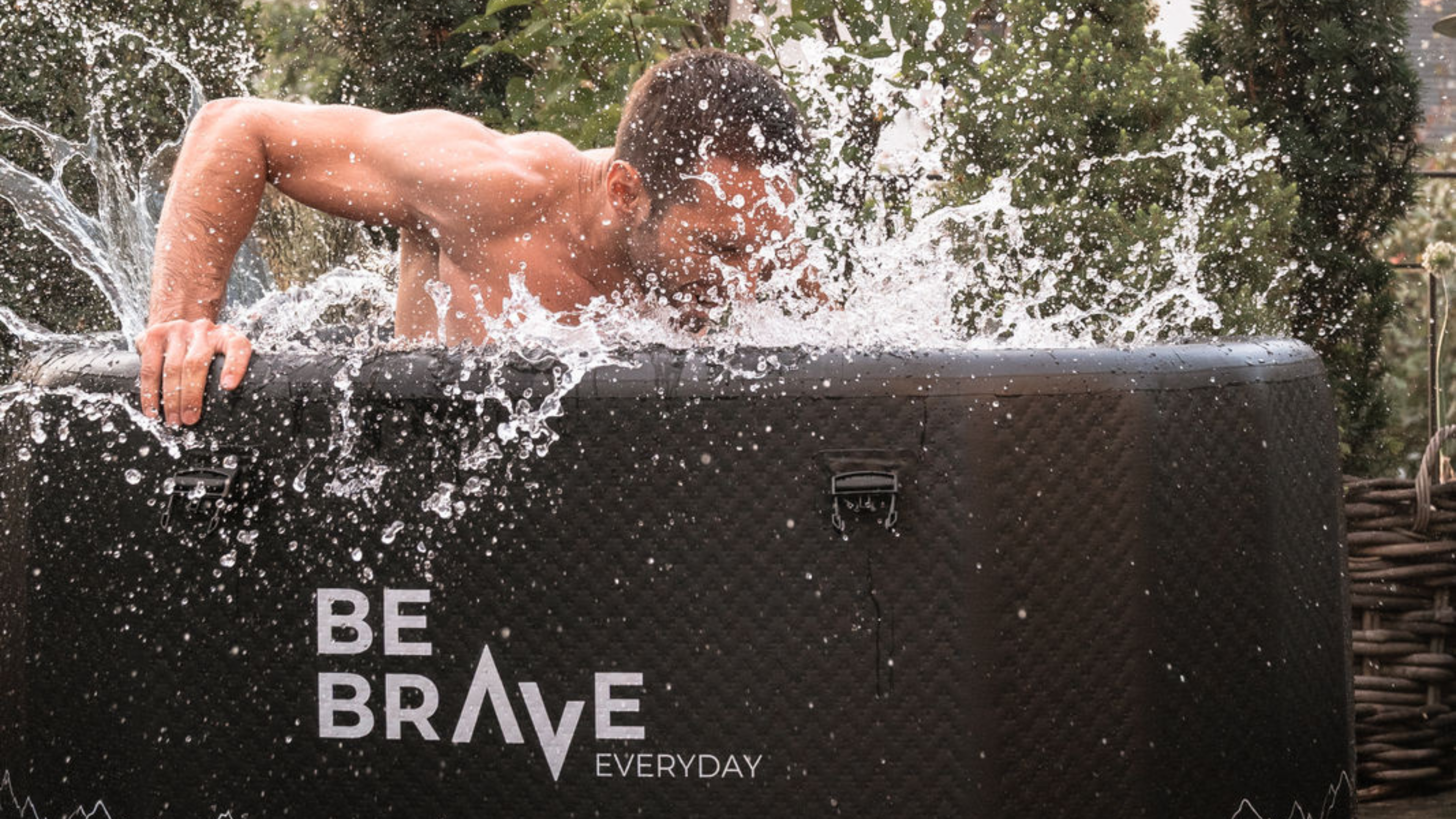
With our ice bath setup, you can step directly into your BE BRAVE ice bath at home after an intense workout, without any detours. You don't have to drive to the nearest mountain lake and you're not dependent on freezing weather.Become part of our BE BRAVE family today and experience a completely new regeneration experience with our ice bath system. Whether lying down or sitting – we have the perfect setup for you.
So, what are you waiting for? Be brave today – BE BRAVE!
Sources:
1) Effects of cryotherapy on athletes
2) Effects of ice baths on muscle building
By subscribing to our newsletter, you will receive the latest insights and tips from the world of cryotherapy once a month in the form of articles and videos, as well as access to discount offers.
The best water cooler for your ice bath
Three good reasons for an ice bath at home